
Jaw pain has a way of sneaking into everything. It shows up when you chew, when you yawn, or when you wake up with a tight, aching face. You might hear a click or pop every time you open your mouth, or notice headaches that seem to start near your temples. If this sounds familiar, you may be dealing with a temporomandibular joint (TMJ) disorder.
Many people don’t realize a chiropractor may be able to help. Here’s what’s happening in your jaw, why your neck matters more than you’d think, and what chiropractic care can and can’t do for TMJ pain.
What Is TMJ?
The temporomandibular joints are the two joints that connect your jawbone to your skull, one on each side of your face, just in front of your ears. They work every time you talk, chew, swallow, or yawn, which makes them some of the most frequently used joints in your body.
“TMJ” is often used as shorthand for a TMJ disorder, which is a group of conditions that cause pain or dysfunction in these joints and the muscles around them.
Common Symptoms of a TMJ Disorder
TMJ problems don’t always show up as obvious jaw pain. Symptoms can include:
- Pain or tenderness in the jaw, face, or around the ear
- Clicking, popping, or grinding sounds when opening or closing your mouth
- Jaw stiffness or a feeling that it “catches” or locks
- Difficulty chewing or pain while eating
- Frequent headaches, especially around the temples
- Ear fullness or ringing that isn’t tied to an ear infection
- Neck and shoulder tension that seems to go along with the jaw pain
What Causes TMJ Pain?
There usually isn’t one single cause. TMJ problems tend to develop from a combination of factors:
Teeth clenching and grinding. Many people clench their jaw during stress or grind their teeth in their sleep, often without knowing it. Over time, this overworks the muscles and strains the joint.
Stress and muscle tension. The jaw is one of the places where the body holds stress. Chronic tension in the face and neck can keep these muscles tight all day. We cover this connection in more detail in How Chronic Stress Causes Body Pain.
Poor posture. When your head sits forward of your shoulders, your jaw has to adapt to a different resting position, which can change how the joint moves. This is common with long hours at a screen, as we explain in Tech Neck & Desk Posture.
Injury or trauma. A blow to the jaw, whiplash from a car accident, or dental work that holds the mouth open for a long time can irritate the joint.
Arthritis or joint wear. In some cases, the joint itself has degenerated over time.
How Are the Jaw and Neck Connected?
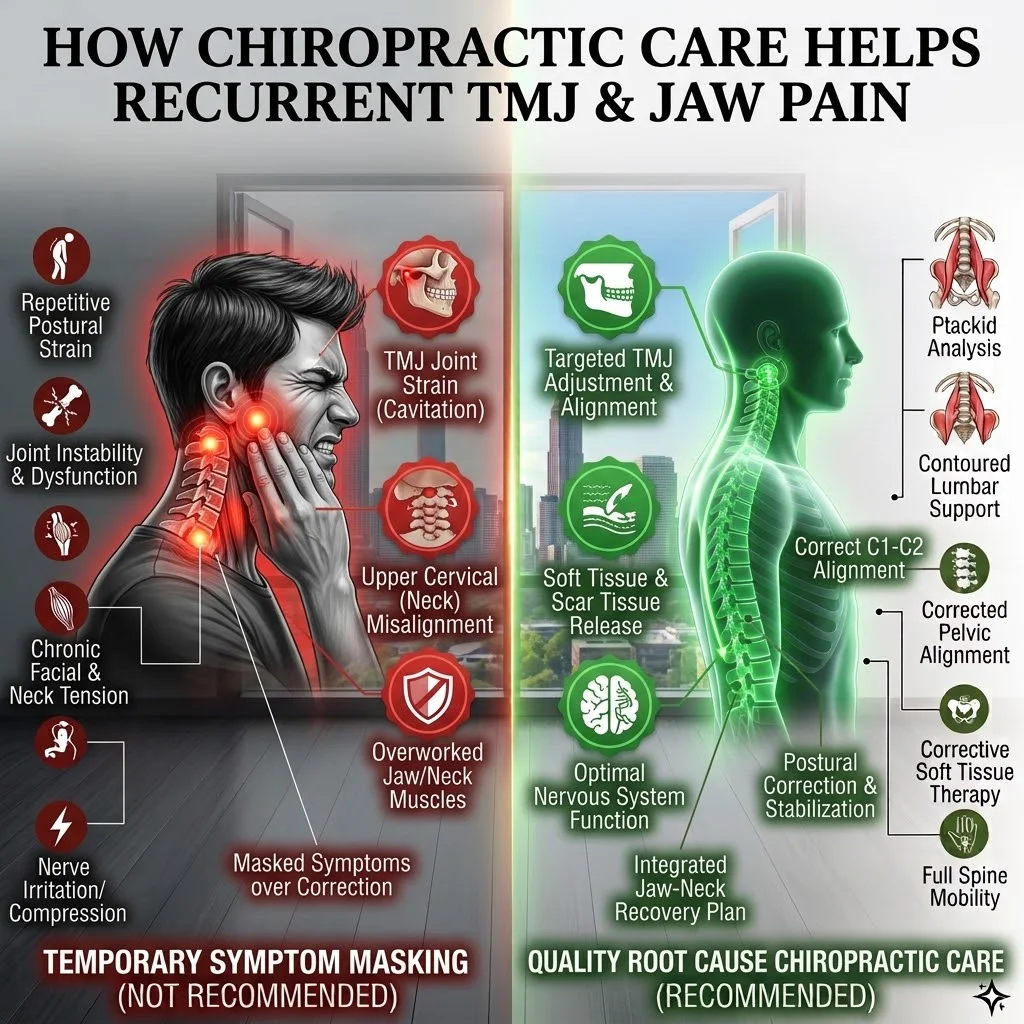
This is where chiropractic care comes in. The jaw and the upper neck are close neighbors, and they share muscles, ligaments, and nerve pathways. The muscles that control your jaw also connect to your skull and neck, so tension in one area often shows up in the other.
When your upper neck is stiff or out of alignment, the muscles around your jaw may compensate by working harder. The reverse also happens: a tight, overworked jaw can pull on the neck and contribute to headaches and stiffness. This is why many people with TMJ pain also have neck pain, and why treating one area without looking at the other can leave relief incomplete.
Can a Chiropractor Help with TMJ?
A chiropractor can often help with the parts of TMJ pain that are tied to neck alignment, muscle tension, and posture. Care for jaw pain may include:
- Upper neck and spinal adjustments to improve alignment and mobility in the area closest to the jaw
- Soft tissue therapy to release tension in the muscles of the neck, shoulders, and jaw
- Posture guidance to reduce the forward-head position that can strain the jaw
- Home recommendations such as gentle jaw relaxation habits and stretches
An honest note on expectations: the research on chiropractic care for TMJ disorders is still limited, and results vary from person to person. Chiropractic care tends to work best as one part of a broader approach, especially when neck tension, posture, or stress are contributing to your symptoms. It isn’t a replacement for dental care. If your TMJ pain is driven mainly by a bite problem, a damaged joint, or severe teeth grinding, a dentist or oral specialist should be involved, and a custom night guard may be part of the answer.
When Should You See a Chiropractor for Jaw Pain?
It’s worth booking an evaluation if:
- Your jaw pain comes with neck stiffness, shoulder tension, or frequent headaches
- The pain started after an injury, such as a car accident or a fall
- You notice you clench your jaw during the day or wake up with a sore face
- Jaw symptoms keep returning even after you’ve tried other approaches
Some symptoms need prompt medical attention rather than waiting for an appointment: a jaw that is locked and won’t open, sudden swelling, or jaw pain together with chest pain or shortness of breath.
Simple Things You Can Try at Home
While you figure out the cause, a few small habits can take pressure off your jaw:
- Rest your jaw. Keep your teeth slightly apart, with your lips closed and your tongue resting gently on the roof of your mouth.
- Avoid very chewy or hard foods like gum, tough meat, or hard candy while your jaw is sore.
- Use warmth. A warm compress on the sides of your face for 10 to 15 minutes can ease muscle tightness.
- Watch your posture. Bring your screen to eye level so your head isn’t drifting forward.
- Notice clenching. If you catch yourself clenching during the day, take a breath and let your jaw drop loose.
Get to the Source of Your Jaw Pain
Jaw pain is rarely just about the jaw. If you’re dealing with clicking, tension, and headaches that keep coming back, an evaluation can help you understand how your neck, posture, and muscle tension are contributing, and what to do about it.
Schedule a consultation with Well Adjusted Buckhead today and let’s find out what’s behind your jaw pain.