
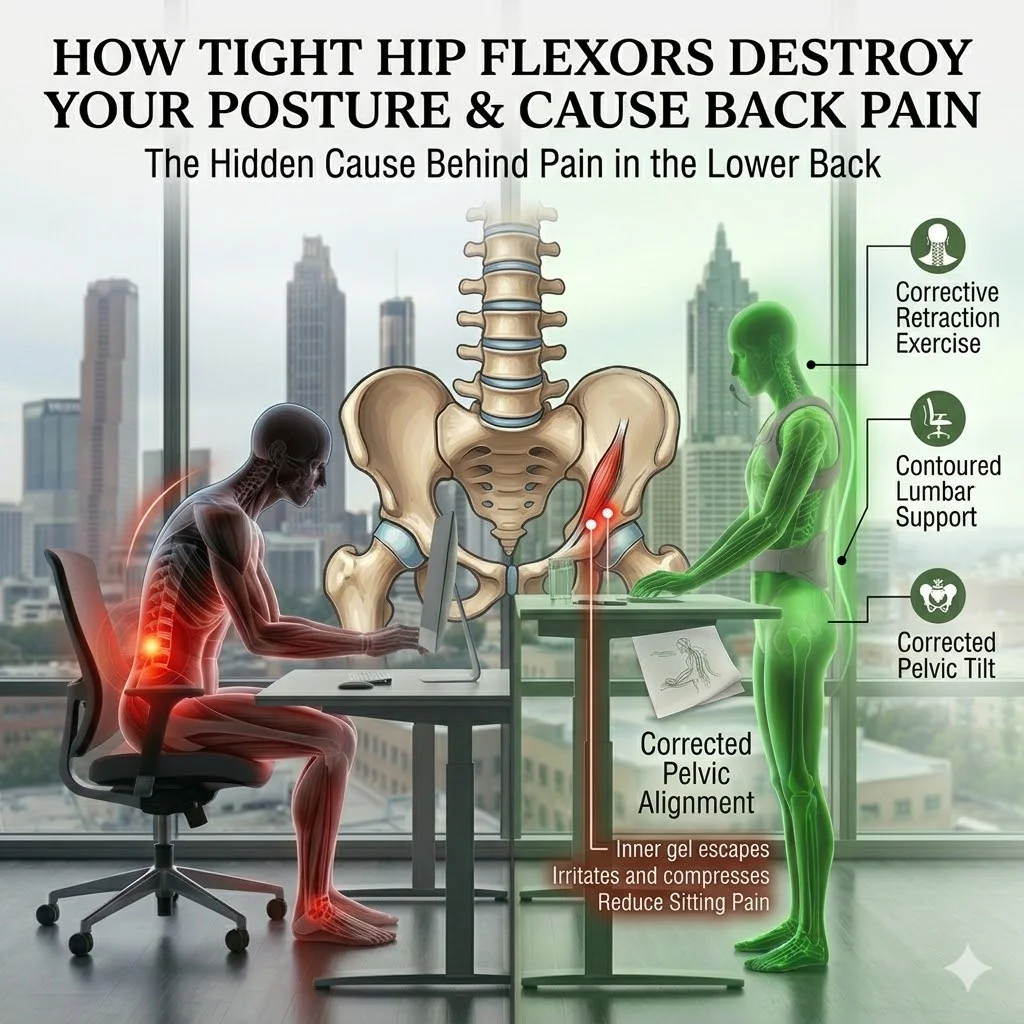
Most people think back pain starts in the spine, but in many cases, the real issue begins in the hips. Tight hip flexors are one of the most overlooked causes of poor posture and chronic lower back pain. In Atlanta, where many professionals spend long hours sitting, this problem is especially common. When hip flexors become tight, they pull the pelvis forward and disrupt spinal alignment. At chiropractor services in Atlanta, we often find this imbalance behind persistent pain cases.
What Are the Hip Flexors?
The hip flexors are a group of muscles located at the front of the hip that allow you to lift your legs, walk, and bend at the waist. These muscles include the iliopsoas and rectus femoris, which connect the lower spine to the thigh. Because they are involved in nearly every movement involving the lower body, they are highly sensitive to prolonged sitting. When these muscles stay in a shortened position for too long, they gradually become tight, limiting mobility and affecting posture.
How Sitting Causes Hip Flexor Tightness
Extended sitting is one of the main reasons hip flexors become tight. When you sit for hours, these muscles remain in a shortened position without regular extension or movement. Over time, this leads to muscle shortening and reduced flexibility. This imbalance pulls the pelvis forward and places stress on the lower back. Many patients with desk jobs in Buckhead experience this without realizing it. Improving spinal alignment through spinal adjustments can help restore balance in the pelvis and spine.
How Tight Hip Flexors Affect Your Posture
When hip flexors are tight, they tilt the pelvis forward in what is known as anterior pelvic tilt. This posture increases the curve in the lower back and places excessive pressure on the lumbar spine. As a result, the upper body may compensate by rounding the shoulders or shifting forward. Over time, this creates a chain reaction of poor posture throughout the spine. Corrective care such as therapeutic exercises helps restore balance between the hips and spine.
Why Tight Hip Flexors Cause Lower Back Pain
Tight hip flexors pull directly on the lower spine, increasing compression and tension in the lumbar region. This constant pulling force leads to muscle fatigue, joint irritation, and reduced spinal stability. Many individuals experience chronic lower back pain without realizing the hips are the root cause. When the pelvis is misaligned, the spine must work harder to maintain balance, which leads to ongoing discomfort. Soft tissue therapies like cupping therapy can help release this tension.
The Connection Between Hip Flexors and Daily Movement
Hip flexor tightness doesn’t just affect posture — it also impacts how you move throughout the day. Walking, standing, and bending all become less efficient when these muscles are restricted. This can lead to compensatory movement patterns that strain the knees, hips, and lower back. Over time, reduced mobility increases the risk of injury. Addressing these imbalances early helps improve overall function and prevents long-term structural issues in the spine and surrounding joints.
How Chiropractic Care Helps Restore Balance
Chiropractic care focuses on correcting spinal and pelvic misalignments that contribute to hip flexor tightness. Through targeted adjustments, chiropractors help restore proper alignment and reduce stress on the lower back. This allows surrounding muscles to relax and function more efficiently. In combination with movement-based therapies, chiropractic care addresses both structural and muscular components of the problem. Many patients experience improved posture, reduced pain, and better mobility after consistent care.
Exercises That Help Release Tight Hip Flexors
Stretching and strengthening exercises play a key role in correcting hip flexor tightness. Lunges, hip extensions, and core strengthening exercises help restore balance between the front and back of the body. However, exercises alone are not always enough if spinal misalignment is present. That’s why combining exercise with professional care such as therapeutic exercises ensures more effective and lasting results for posture and pain correction.
When to Seek Professional Help
If you are experiencing persistent lower back pain, stiffness in the hips, or noticeable posture changes, it may be time to seek professional care. Tight hip flexors often develop gradually, so symptoms can be overlooked until they become more severe. Early intervention helps prevent long-term spinal stress and improves recovery outcomes. A chiropractic evaluation can identify whether hip flexor tightness is contributing to your pain and provide a personalized treatment plan.
Take Control of Your Posture and Hip Health
Tight hip flexors are a hidden but powerful contributor to poor posture and chronic back pain. By addressing both muscle tightness and spinal alignment, you can significantly improve mobility and reduce discomfort. If you are struggling with posture-related pain in Atlanta or Buckhead, professional chiropractic care can help restore balance and function.