
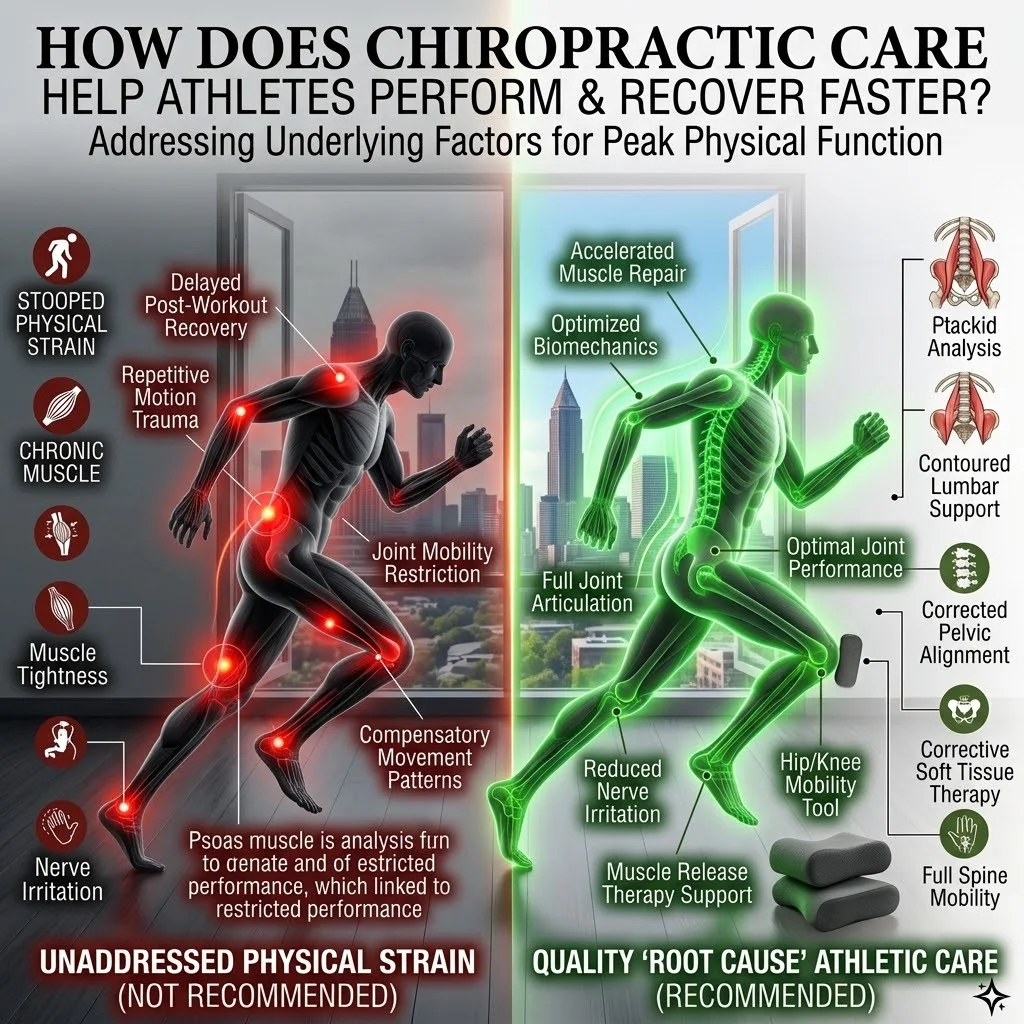
Buckhead has no shortage of runners, lifters, cyclists, and weekend warriors squeezing in workouts before work, after work, or wherever they can fit them. If that’s you, chances are you’re already paying attention to what you eat, how you train, and how you recover. But there’s one piece of the performance puzzle that often gets overlooked: how well your spine and joints are actually moving.
Chiropractic care isn’t just for when something hurts. For athletes and active people, it’s a performance tool — one that helps you move better, train harder, and recover faster.
Why Athletes Use Chiropractic Care
At its core, athletic performance comes down to how efficiently your body moves. Every squat, stride, swing, or pedal stroke depends on your joints moving through their full range of motion and your nervous system communicating properly with your muscles. When your spine is misaligned or a joint isn’t moving the way it should, your body compensates — and compensation is where problems start.
Chiropractic care addresses this at the source. Regular adjustments help:
- Restore proper joint mobility, so your body isn’t working around restrictions
- Improve nervous system function, supporting better muscle activation and coordination
- Correct movement compensations before they turn into overuse injuries
- Reduce recovery time between training sessions by keeping the body functioning the way it’s designed to
This is why you’ll find chiropractic care built into the routines of professional and amateur athletes alike — it’s not just about treating pain, it’s about keeping the whole system running efficiently.
Common Issues Adjustments Address in Active People
Active bodies take on repetitive stress in very specific patterns, depending on the sport or activity. Some of the most common issues we see in athletic patients include:
- Overuse injuries from repetitive movements — think runner’s knee, shoulder impingement from swimming or lifting, or lower back strain from cycling
- Muscle compensation patterns, where one tight or weak area forces another part of the body to overwork and take on strain it wasn’t meant to handle
- Restricted joint mobility, especially in the hips, spine, and shoulders, which limits range of motion and can quietly cap your performance without you realizing it’s happening
Left unaddressed, these small inefficiencies tend to snowball — a minor hip restriction today can turn into knee or lower back pain a few months down the road, simply because the body kept compensating around it.
Building a Maintenance Plan for Active Lifestyles
One of the most common questions we hear from athletic patients is simply: how often should I actually be coming in? The honest answer depends on your training volume, your sport, and whether you’re actively managing an issue or maintaining performance. We break this down in more detail in How Often Should You See a Chiropractor in Atlanta? — but generally, athletes in-season or training at higher intensity benefit from more frequent visits than someone using chiropractic care for general wellness.
The goal of a maintenance plan isn’t to fix something that’s broken. It’s to catch small restrictions and imbalances before they turn into the kind of injury that sidelines you.
Recovery Tools That Work Alongside Adjustments
Chiropractic adjustments address alignment and joint mobility, but they’re often even more effective when paired with soft tissue and recovery-focused therapies. At Well Adjusted Buckhead, we frequently combine adjustments with:
- Cupping therapy, which helps speed up muscle recovery and reduce soreness after intense training — we cover exactly how this works in Cupping Therapy: Faster Muscle Recovery for Athletes
- Graston Technique, used to break up scar tissue and adhesions in overworked muscles and connective tissue
- SoftWave TRT, a regenerative therapy that accelerates healing and reduces pain without medication or surgery, which we go into more detail on in How SoftWave TRT Accelerates Healing & Pain Relief
Think of adjustments as keeping your structural alignment and mobility on track, while these therapies support the muscles and soft tissue doing the actual work. Together, they cover both sides of athletic recovery.
Prevention vs. Reaction
It’s easy to think of chiropractic care as something you turn to after an injury happens. But some of the best results we see are in athletes who come in proactively — before pain shows up, not after.
Waiting until you’re injured means playing catch-up: managing pain, working around limitations, and often losing training time in the process. Proactive care, on the other hand, means catching the small restrictions and compensations before they force you to sit out. If you’re serious about your training, treating chiropractic care as part of your routine — not just your emergency plan — is one of the simplest ways to stay ahead of injury.
Train Harder, Recover Faster
Whether you’re training for a race, chasing a new personal best in the gym, or just trying to keep up with an active lifestyle without constantly feeling beat up, chiropractic care can help you move better and recover faster. And if you’re a gym member, don’t forget to check out our Gym Membership Reimbursement program — another way we support an active Buckhead community.