
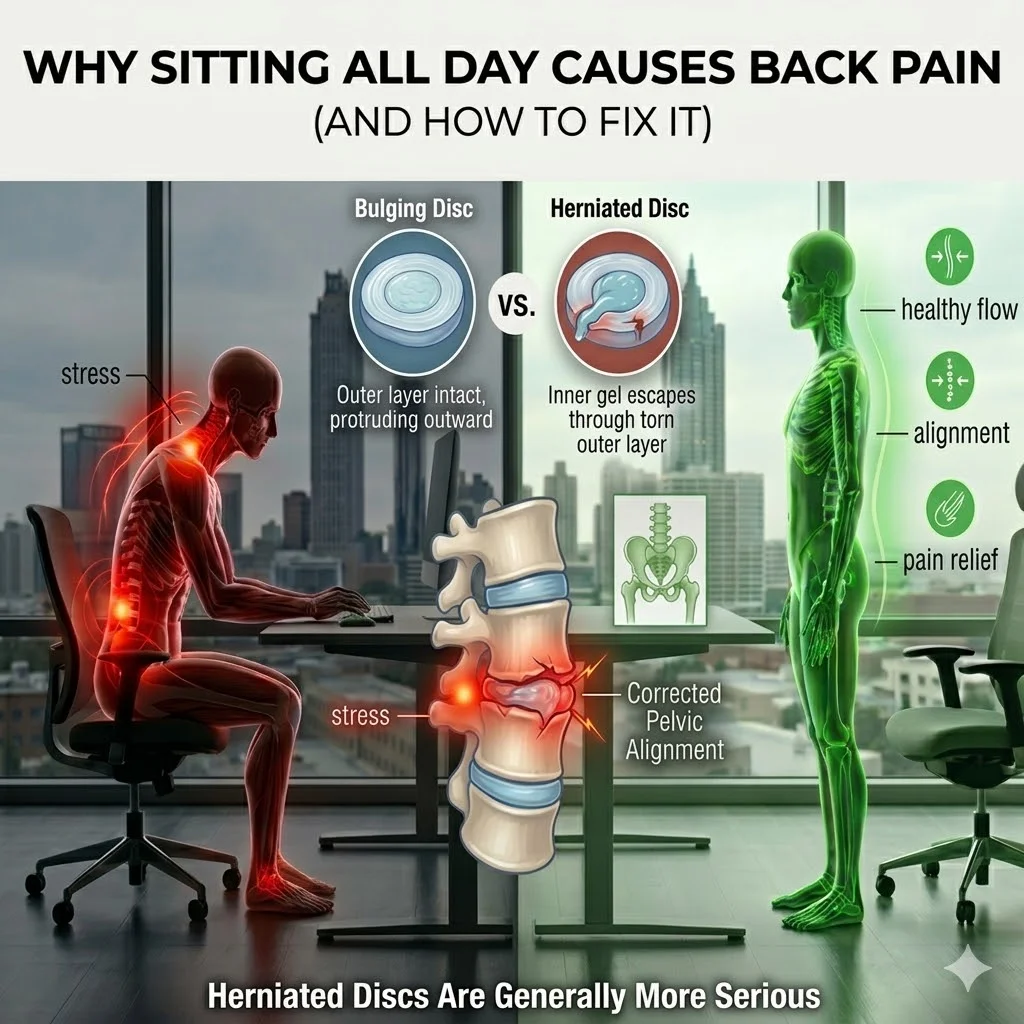
Back pain is one of the most common reasons people seek chiropractic care, and disc-related issues are often a major cause. Two frequently confused conditions are herniated discs and bulging discs. While they may sound similar, they are not the same and can affect the spine differently. Many patients in Buckhead and across Atlanta experience pain without fully understanding what is happening in their spine. At Well Adjusted Buckhead, we help patients identify and treat these conditions effectively.
What Is a Bulging Disc?
A bulging disc occurs when the outer layer of a spinal disc weakens and extends outward beyond its normal boundary. The disc remains intact, but it pushes into the surrounding space, which may place pressure on nearby nerves. Bulging discs are often caused by aging, repetitive strain, or prolonged poor posture. Many people may not feel symptoms immediately, but if the disc presses against a nerve, it can lead to discomfort, stiffness, or mild radiating pain in the back or legs.
What Is a Herniated Disc?
A herniated disc is more severe and occurs when the inner gel-like material of the disc pushes through a tear in the outer layer. This can directly irritate nearby nerves and cause more noticeable symptoms. Herniated discs often result from sudden strain, injury, or long-term degeneration of the spine. Because the inner material can inflame surrounding tissues, patients may experience sharper pain, numbness, or weakness. Conditions like sciatica are commonly linked to herniated discs affecting the lower spine.
Key Differences Between Bulging and Herniated Discs
The primary difference between a bulging disc and a herniated disc lies in the condition of the disc’s outer layer. In a bulging disc, the outer layer remains intact but protrudes outward. In a herniated disc, the outer layer is torn, allowing the inner material to escape. This makes herniated discs more likely to irritate nerves and cause severe symptoms. While both conditions can lead to pain, herniated discs typically result in more intense and localized nerve-related discomfort.
Which Is Worse: Herniated or Bulging Disc?
In most cases, a herniated disc is considered more serious because it directly involves nerve irritation and inflammation. However, the severity of symptoms depends on the location and extent of the condition. A bulging disc can still cause significant pain if it presses on a nerve, while some herniated discs may cause minimal symptoms. The key factor is not just the diagnosis but how the disc affects surrounding nerves and spinal function, which determines the level of discomfort and limitation.
Common Symptoms of Disc Problems
Both bulging and herniated discs can produce similar symptoms depending on nerve involvement. These may include lower back pain, stiffness, tingling, or numbness that travels into the arms or legs. Muscle weakness and reduced mobility are also common. Pain often worsens with sitting, bending, or lifting. When nerves are affected, symptoms may radiate beyond the spine, making everyday movements uncomfortable. Identifying these symptoms early can help prevent worsening conditions and improve recovery outcomes.
How Chiropractic Care Helps Disc Conditions
Chiropractic care focuses on improving spinal alignment and reducing pressure on affected discs and nerves. Gentle techniques such as spinal adjustments can restore movement and relieve stress on the spine. By improving joint mobility, chiropractic care helps reduce inflammation and muscle tension. Many patients experience reduced pain and improved function without the need for invasive procedures, making chiropractic treatment a preferred option for managing disc-related conditions.
Supporting Recovery with Movement and Therapy
In addition to adjustments, strengthening and mobility exercises play a critical role in recovery. Targeted programs like therapeutic exercises help stabilize the spine and prevent further injury. Soft tissue treatments such as the Graston technique and cupping therapy can relieve muscle tightness and improve circulation. This combination of treatments helps patients recover faster while reducing the risk of recurring pain.
When to Seek Professional Help
If you are experiencing persistent back pain, numbness, or weakness, it is important to seek professional evaluation. Symptoms that worsen over time or interfere with daily activities may indicate a disc issue requiring attention. Early diagnosis allows for more effective treatment and reduces the risk of long-term complications. Chiropractic evaluation includes assessing posture, spinal alignment, and movement patterns to determine the root cause of pain and create a personalized care plan.
Take Control of Your Spinal Health
Understanding the difference between a bulging and a herniated disc is the first step toward effective treatment. While both conditions can cause discomfort, early care and proper management can significantly improve outcomes. If you are dealing with back pain in Atlanta or Buckhead, professional care can help restore mobility and reduce pain.