
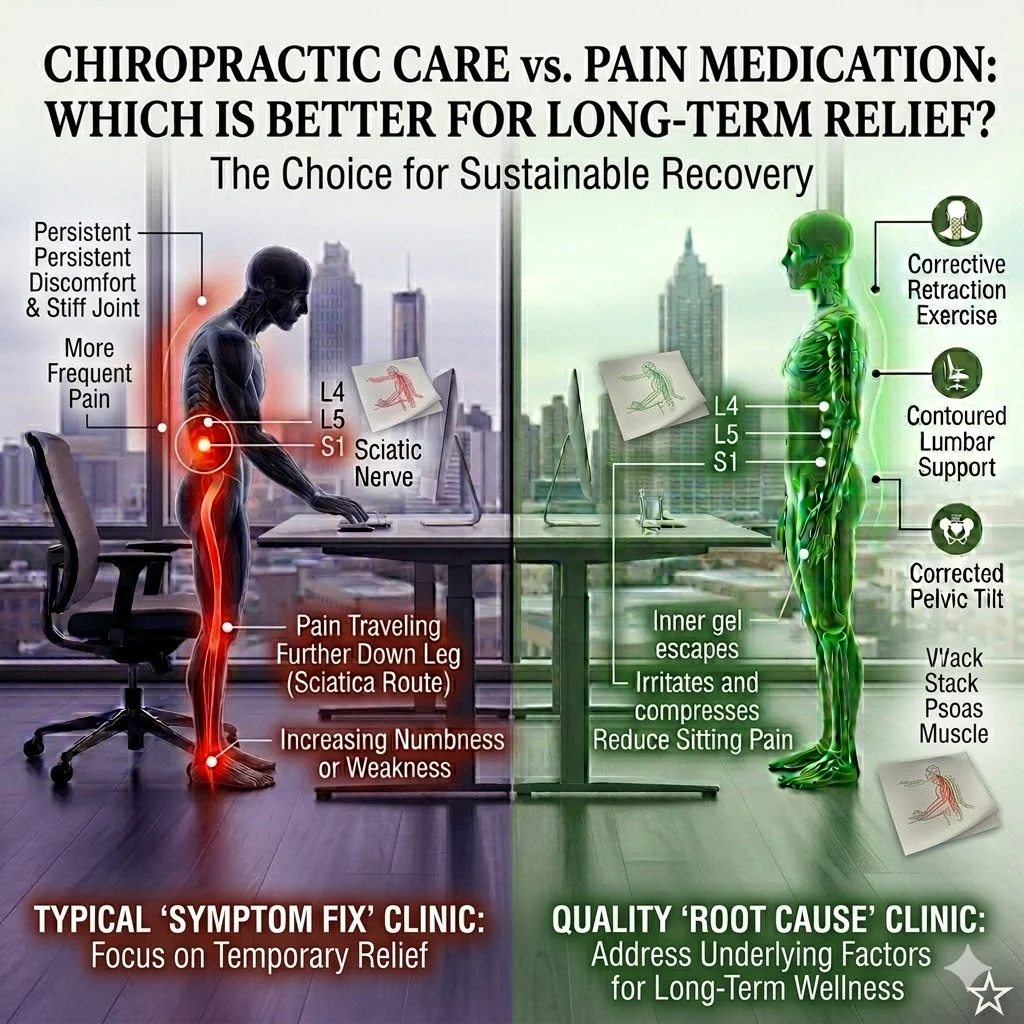
When pain begins interfering with daily life, many people look for the fastest way to find relief. Pain medication is often the first solution people consider because it can temporarily reduce discomfort and help them continue their normal activities. However, many individuals eventually wonder whether medication alone is addressing the underlying problem or simply masking symptoms. Chiropractic care offers a different approach by focusing on improving spinal function, mobility, and overall body mechanics. Understanding the differences between these treatment options can help you make a more informed decision about your long-term health.
Understanding Pain Medication
Pain medications are commonly used to manage symptoms associated with back pain, neck pain, headaches, arthritis, and other musculoskeletal conditions. Depending on the type of medication, they may reduce inflammation, block pain signals, or alter the way the brain perceives pain. While these medications can provide temporary relief, they typically do not address the underlying structural or functional issues contributing to discomfort. For many people, symptoms return once the medication wears off, creating a cycle of ongoing symptom management rather than long-term improvement.
How Chiropractic Care Takes a Different Approach
Chiropractic care focuses on identifying and addressing the root causes of pain rather than simply reducing symptoms. Through spinal adjustments, mobility-focused treatments, soft tissue therapies, and corrective exercises, chiropractors work to improve the function of the musculoskeletal and nervous systems. The goal is to help the body move more efficiently and reduce stress on joints, muscles, and nerves. This approach may help patients achieve longer-lasting improvements while supporting overall health and mobility.
If you are considering professional treatment, our Chiropractor in Atlanta page explains how personalized chiropractic care can help address a variety of musculoskeletal conditions.
Pain Relief vs. Problem Resolution
One of the biggest differences between chiropractic care and pain medication is the treatment objective. Pain medication is primarily designed to reduce symptoms, while chiropractic care aims to identify and correct contributing factors such as spinal dysfunction, poor posture, restricted mobility, and muscle imbalances.
For example, a person experiencing recurring lower back pain may receive temporary relief from medication, but if poor movement patterns or spinal dysfunction remain unaddressed, symptoms are more likely to return. This is why many individuals explore chiropractic care as part of a comprehensive long-term pain management strategy.
Potential Benefits of Pain Medication
Pain medication can be beneficial in certain situations, especially when short-term symptom control is needed. Acute injuries, post-surgical recovery, or severe flare-ups may require temporary pain management to help patients remain functional during the healing process. Some potential benefits include:
- Rapid symptom relief
- Reduced inflammation in certain cases
- Improved short-term comfort
- Increased ability to perform daily activities during acute episodes
However, long-term reliance on medication alone may not always provide a complete solution when structural or mechanical issues contribute to ongoing pain.
Potential Benefits of Chiropractic Care
Chiropractic care offers several potential advantages for individuals seeking a non-invasive approach to long-term pain management. By focusing on mobility, alignment, and nervous system function, treatment may help improve the body’s ability to move and function more effectively. Potential benefits may include:
- Improved spinal mobility
- Better posture and movement patterns
- Reduced joint restrictions
- Enhanced flexibility
- Support for long-term wellness
- Reduced reliance on symptom-focused treatments
Many patients also appreciate that chiropractic care is personalized based on their individual condition and recovery goals.
Which Conditions May Benefit From Chiropractic Care?
Chiropractic care is commonly used to help individuals experiencing a variety of musculoskeletal conditions. These may include:
- Back Pain
- Neck Pain
- Sciatica
- Herniated and Bulging Discs
- Headaches and Migraines
- Sports Injuries
- Postural Dysfunction
- Joint Pain
- Mobility Restrictions
For example, patients experiencing nerve-related pain may benefit from reading our guide on Can a Chiropractor Help With Sciatica? Causes & Treatment to learn more about treatment options and recovery strategies.
The Importance of Addressing the Root Cause
Many chronic pain conditions develop gradually over time due to repetitive stress, poor posture, sedentary lifestyles, movement dysfunctions, or unresolved injuries. Simply managing symptoms without identifying the source of the problem may allow the condition to persist or worsen.
Our article on 5 Common Causes of Recurrent Back Pain (And How to Fix Them) explains how underlying issues often contribute to recurring symptoms and why addressing those factors is essential for achieving lasting improvement.
A comprehensive evaluation can help determine what is causing pain and whether chiropractic care, medical treatment, or a combination of approaches may be most appropriate.
Can Chiropractic Care and Medication Be Used Together?
In many situations, chiropractic care and medication are not mutually exclusive. Some patients use medication for short-term symptom control while receiving chiropractic treatment to address the underlying cause of discomfort. This combined approach may provide immediate relief while supporting longer-term recovery goals.
The best treatment strategy depends on the individual’s condition, medical history, and overall health goals. Working with qualified healthcare professionals can help ensure that all aspects of treatment are coordinated appropriately.
Which Option Is Better for Long-Term Relief?
For many individuals dealing with chronic musculoskeletal pain, the answer depends on the underlying cause of their symptoms. Pain medication may help manage discomfort temporarily, but it often does not correct the structural, mechanical, or movement-related issues contributing to pain.
Chiropractic care focuses on improving function, mobility, and overall body mechanics, making it an attractive option for those seeking a long-term approach to pain management. While every situation is different, addressing the root cause of pain often provides a stronger foundation for lasting improvement than symptom management alone.
Explore a Long-Term Approach to Pain Relief
If you are tired of relying solely on temporary symptom relief and want to address the underlying causes of pain, chiropractic care may be worth exploring. By focusing on mobility, spinal function, and overall body mechanics, chiropractic treatment can play an important role in supporting long-term wellness and recovery.
At Well Adjusted Buckhead, we provide personalized chiropractic care designed to help patients improve mobility, reduce discomfort, and achieve lasting results. Contact our team today to schedule an appointment and learn how chiropractic care may fit into your long-term health strategy.
Frequently Asked Questions
Is chiropractic care safer than long-term pain medication use?
Chiropractic care is a non-invasive treatment option that focuses on improving movement and function. Many patients explore chiropractic care as part of a broader strategy to reduce reliance on symptom-focused treatments. Treatment decisions should always be based on individual health needs and professional recommendations.
Can chiropractic care replace pain medication?
Some patients find that addressing the underlying causes of pain helps reduce their need for medication. However, treatment plans vary depending on the condition, severity of symptoms, and medical history.
What types of pain respond well to chiropractic care?
Chiropractic care is commonly used for back pain, neck pain, sciatica, headaches, joint discomfort, posture-related issues, and mobility limitations.
How long does it take to see results from chiropractic care?
Results vary depending on the individual and the condition being treated. Some patients notice improvement within a few visits, while others require a more comprehensive treatment plan to achieve lasting results.