
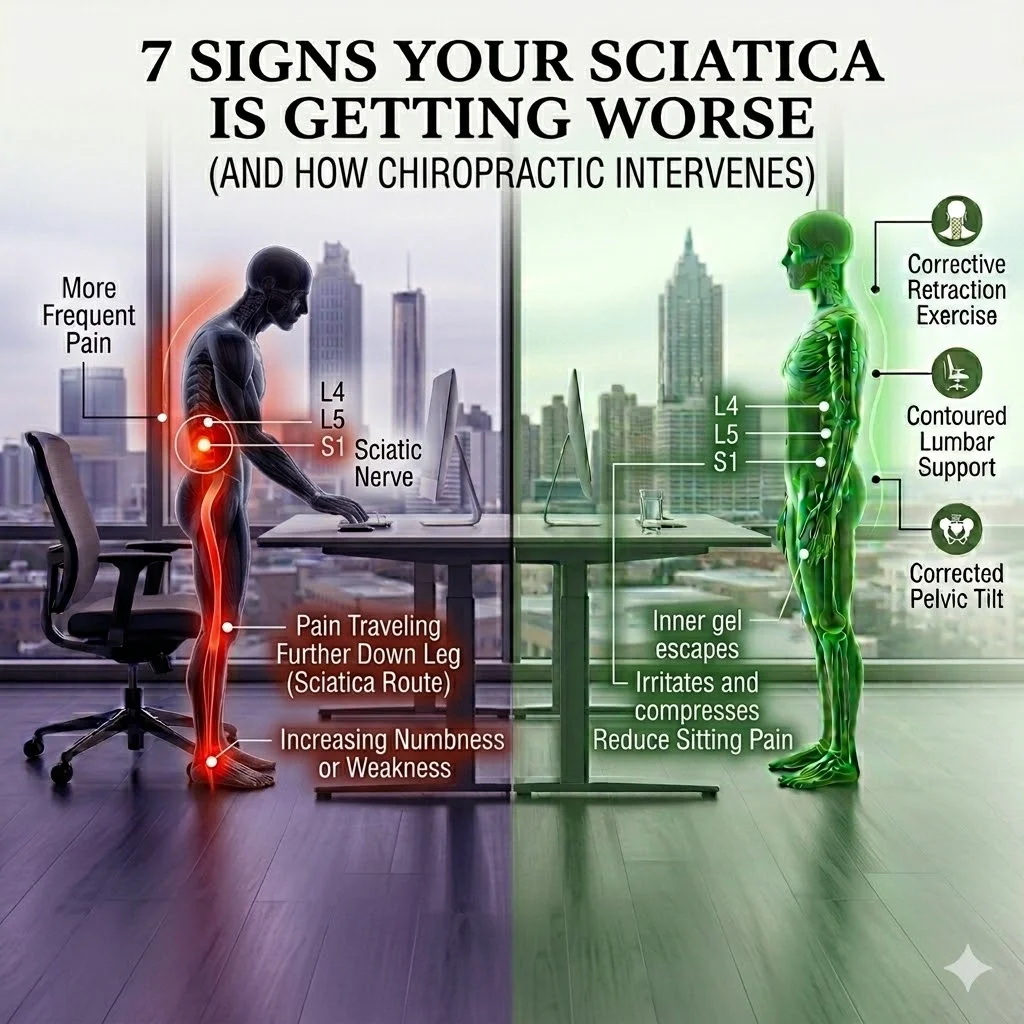
Sciatica can range from a mild annoyance to a condition that significantly affects your ability to work, exercise, and enjoy everyday activities. While occasional discomfort may improve with rest and conservative care, worsening symptoms can indicate increasing irritation or compression of the sciatic nerve. Recognizing the warning signs early can help prevent further complications and allow you to seek appropriate treatment before the condition becomes more severe. Understanding what to watch for is an important step toward protecting your mobility, comfort, and long-term spinal health.
What Is Sciatica?
Sciatica occurs when the sciatic nerve becomes irritated, inflamed, or compressed. The sciatic nerve is the largest nerve in the body and travels from the lower back through the hips and buttocks before extending down each leg. Conditions such as herniated discs, spinal misalignment, degenerative changes, or muscle-related nerve compression can trigger symptoms. While some cases improve naturally, persistent or worsening symptoms often require professional evaluation.
If you are unfamiliar with the condition, our guide on Can a Chiropractor Help With Sciatica? Causes & Treatment provides a detailed overview of how sciatica develops and available treatment options.
1. Your Pain Is Becoming More Frequent
One of the earliest signs that sciatica may be worsening is an increase in the frequency of symptoms. Pain that once appeared occasionally may begin occurring daily or become more difficult to control with rest and self-care measures. Many patients notice that activities such as sitting, driving, bending, or walking trigger discomfort more easily than before. When symptoms become increasingly frequent, it often suggests ongoing irritation of the sciatic nerve that should not be ignored.
2. Pain Is Traveling Further Down Your Leg
Sciatica often begins with discomfort in the lower back or buttocks, but worsening nerve irritation can cause pain to radiate further down the leg. Some individuals experience symptoms extending into the calf, ankle, or foot. This progression may indicate increased nerve compression and should be evaluated promptly. The farther symptoms travel down the leg, the more significant the nerve involvement may become. Early intervention can help address the underlying cause before symptoms continue to spread.
3. Numbness or Tingling Is Increasing
Occasional tingling may be common with sciatica, but increasing numbness or persistent “pins and needles” sensations can indicate worsening nerve dysfunction. These symptoms may develop in the thigh, calf, foot, or toes and often suggest that the affected nerve is under greater pressure. Persistent numbness can interfere with balance, coordination, and daily activities. If these sensations become more noticeable or begin affecting normal function, it is important to seek professional evaluation.
4. You Are Experiencing Leg Weakness
Weakness is one of the more concerning symptoms associated with worsening sciatica. Patients may notice difficulty climbing stairs, standing from a seated position, or maintaining balance while walking. Some individuals feel as though their leg may give out unexpectedly. Muscle weakness can occur when nerve signals are disrupted for an extended period of time. Because this symptom may indicate significant nerve involvement, it should never be ignored.
5. Sitting Has Become Increasingly Difficult
Many people with sciatica experience discomfort when sitting, but worsening symptoms often make prolonged sitting extremely challenging. Office workers, drivers, and individuals with sedentary jobs may find that pain intensifies after only a short period of sitting. This increased sensitivity often reflects greater nerve irritation and inflammation. If sitting has become a daily struggle, addressing the source of the problem may help prevent further progression and improve overall quality of life.
6. Symptoms Are Affecting Sleep
Pain that interferes with sleep is often a sign that sciatica is becoming more severe. Difficulty finding a comfortable position, waking up during the night due to leg pain, or experiencing morning stiffness can indicate ongoing inflammation and nerve irritation. Poor sleep may also slow the body’s natural healing processes and increase sensitivity to pain. When symptoms begin disrupting rest, it is often time to consider a more comprehensive treatment approach.
7. Everyday Activities Are Becoming More Difficult
One of the clearest signs that sciatica is worsening is when routine activities become increasingly difficult to perform. Walking, exercising, lifting objects, working, or even simple household tasks may trigger discomfort.
As mobility decreases, compensation patterns can develop throughout the body, potentially leading to additional issues such as posture problems or recurring back pain. Our article on 5 Common Causes of Recurrent Back Pain (And How to Fix Them) explains how unresolved spinal dysfunction can contribute to ongoing pain and movement limitations.
What to Do If Your Sciatica Is Getting Worse
If your symptoms are becoming more frequent, more intense, or beginning to affect daily activities, it is important to identify the underlying cause. While rest, stretching, and activity modification may provide temporary relief, they do not always address the source of nerve irritation. A comprehensive evaluation can help determine whether factors such as spinal misalignment, disc problems, posture dysfunction, or mobility restrictions are contributing to your symptoms. Early treatment often leads to better outcomes and may help prevent long-term complications.
How Chiropractic Care May Help
Chiropractic care focuses on improving spinal function, mobility, and alignment to reduce stress on affected nerves. Depending on the underlying cause of sciatica, treatment may include spinal adjustments, soft tissue therapy, corrective exercises, posture recommendations, and specialized techniques such as Cox Flexion Distraction Therapy. By addressing the root cause of nerve irritation, chiropractic care may help reduce pain, improve movement, and support long-term recovery without relying solely on medications.
For patients seeking professional evaluation, our Chiropractors provides more information about the personalized chiropractic services available at Well Adjusted Buckhead.
Take the Next Step Toward Sciatica Relief
If you have noticed increasing pain, numbness, weakness, or difficulty performing everyday activities, your sciatica may be progressing. Addressing symptoms early can help prevent further complications and support a smoother recovery.
At Well Adjusted Buckhead, we provide personalized chiropractic care designed to identify the underlying cause of sciatica and help patients achieve lasting relief. If your symptoms are getting worse, schedule an appointment today and take the first step toward improving your mobility, comfort, and quality of life.