
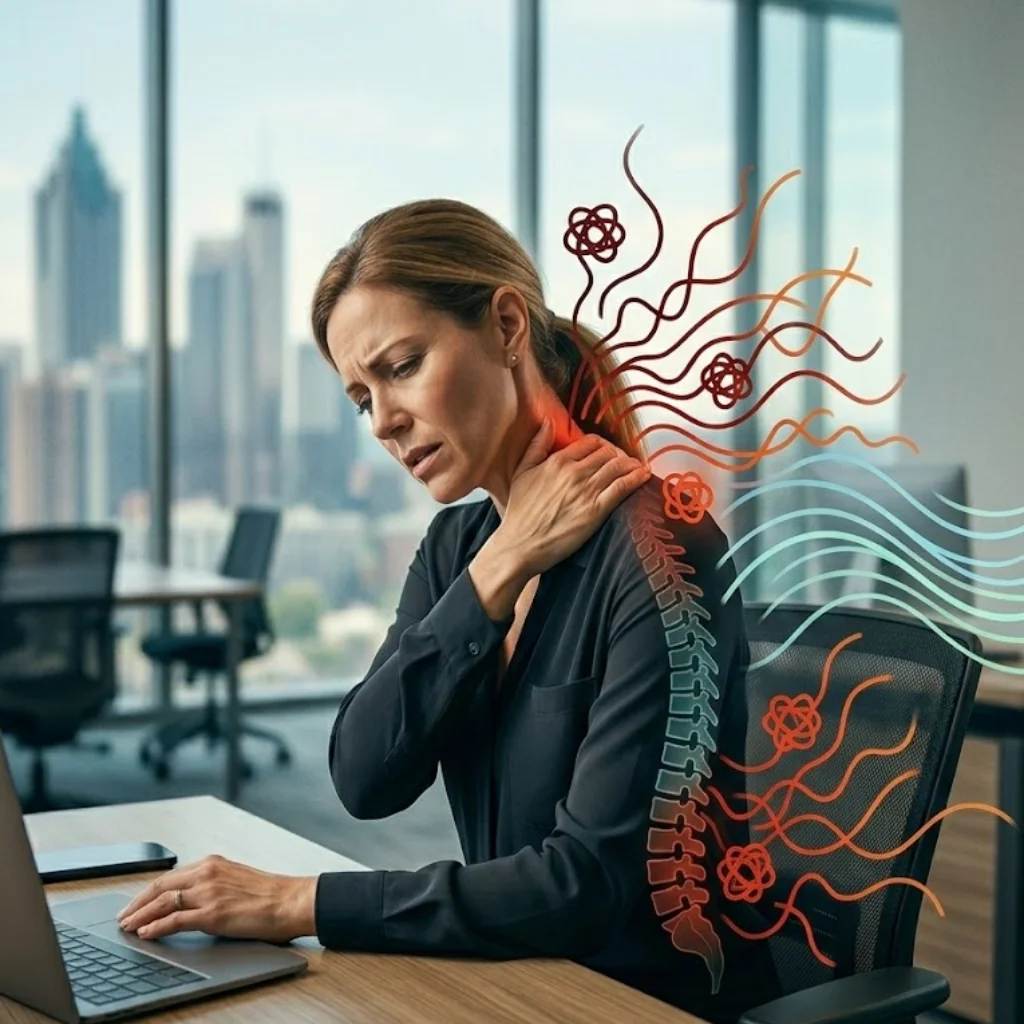
Many people think stress only affects mood or energy levels, but chronic stress has a powerful physical impact on the body. In busy areas like Buckhead and greater Atlanta, professionals often experience persistent neck stiffness, shoulder tension, and lower back pain without realizing stress may be a root cause. When stress becomes ongoing, the body stays in a heightened state of alertness, leading to muscle tightness, inflammation, and nervous system imbalance. Over time, this stress response can create real, measurable pain patterns throughout the body.
How Chronic Stress Alters Your Nervous System
When stress continues for weeks or months, the body remains in a heightened sympathetic state, often called “fight-or-flight.” This prolonged activation overstimulates nerves and prevents muscles from fully relaxing. The nervous system becomes hypersensitive, meaning even minor movements may trigger discomfort. Spinal misalignments can further irritate nerve pathways, amplifying tension. Through precise Spinal Adjustments, chiropractic care helps restore proper communication between the spine and nervous system, allowing the body to shift from constant tension toward balanced regulation.
Muscle Tension: The Hidden Effect of Stress
One of the earliest signs of chronic stress is persistent muscle tightness. The body instinctively contracts muscles to protect itself, particularly in the neck, shoulders, and lower back. When that contraction becomes continuous, circulation decreases and metabolic waste accumulates in the tissue. This leads to soreness, stiffness, and reduced flexibility. Complementary therapies such as Therapeutic Exercises help retrain weakened muscles while improving endurance, allowing the body to maintain proper posture without excessive strain.
Why Stress Commonly Causes Neck and Shoulder Pain
The cervical spine is especially reactive to emotional stress. Many individuals unconsciously elevate their shoulders or jut their head forward during high-pressure situations. Over time, this posture strains small stabilizing muscles and compresses joints in the upper spine. The result may include tension headaches, limited range of motion, and chronic stiffness. Targeted soft tissue techniques like Graston Technique and Cupping Therapy can help release fascial restrictions and improve mobility in these commonly affected regions.
The Link Between Stress and Lower Back Pain
Stress impacts breathing patterns and core engagement, often leading to shallow breathing and poor lumbar stability. Combined with prolonged sitting, this increases mechanical pressure on spinal discs and supporting ligaments. Elevated stress hormones may also heighten inflammation, making the lower back more sensitive to discomfort. Integrated care that includes Electrical Muscle Stimulation alongside chiropractic adjustments can improve circulation, reduce muscle guarding, and support recovery from stress-related lumbar strain.
The Stress–Pain Cycle Explained
Stress and pain often reinforce each other in a continuous loop. Stress increases muscle tension and nerve sensitivity, which creates discomfort. That discomfort then increases emotional strain, which further tightens muscles and disrupts recovery. This cycle makes pain feel chronic and unpredictable. Without intervention, the body remains stuck in this pattern. Breaking the stress–pain cycle requires addressing both spinal alignment and nervous system balance, which is why many patients seek chiropractic care as part of their long-term solution.
How Chiropractic Care Helps Reduce Stress-Related Pain
Chiropractic care focuses on restoring proper spinal alignment and improving nervous system communication. When the spine moves correctly, nerve irritation decreases and muscles can relax more effectively. Adjustments help reduce mechanical stress on joints while improving mobility and circulation. Many patients report feeling physically lighter and more relaxed after care. By supporting the body’s natural ability to regulate tension, chiropractic treatment addresses both the structural and neurological components of stress-related pain.
The Role of Movement and Postural Correction
Stress often leads to rigid posture and limited movement patterns. Chiropractic care frequently includes corrective exercises designed to strengthen weak muscles and release tight ones. When posture improves, the body distributes weight more evenly, reducing strain on the spine. Proper movement retraining also lowers the risk of recurring tension buildup. For professionals in Atlanta who spend long hours at desks, combining spinal care with postural guidance can significantly reduce daily stress on the body.
Daily Strategies to Minimize Stress-Induced Pain
While professional care is important, daily habits also play a crucial role in reducing stress-related discomfort. Deep breathing exercises activate the parasympathetic nervous system, helping the body shift into a relaxed state. Regular movement breaks prevent prolonged muscle contraction. Maintaining ergonomic alignment at your workstation reduces spinal strain. Prioritizing sleep and hydration supports tissue recovery and inflammation control. These consistent habits, combined with chiropractic care, can dramatically reduce the physical impact of chronic stress.
When to Seek Professional Support
If neck stiffness, shoulder tension, headaches, or back pain persist despite stretching or rest, stress may be contributing more than you realize. Pain that lasts for weeks or interferes with sleep and work performance should not be ignored. Early intervention prevents small issues from developing into chronic conditions. A thorough chiropractic evaluation can identify alignment issues, movement restrictions, and muscular imbalances that may be amplified by stress.
Take Control of Stress and Restore Balance
Chronic stress doesn’t have to control your body or your comfort. With proper spinal alignment, nervous system support, and targeted movement correction, it is possible to break the cycle of tension and pain. If you’re experiencing stress-related discomfort in Atlanta or Buckhead, seeking professional guidance can be the first step toward lasting relief. Restoring balance in the body often leads to improved posture, better mobility, and a greater sense of overall well-being.